ServicesEquipment Installation
Loading Dock Equipment Installation in Pottsville
We install dock levelers, vehicle restraints, overhead doors, high speed doors and rolling grilles at working facilities. We measure first, plan the job around your trucks, anchor everything properly and test it with your crew before we pack up.
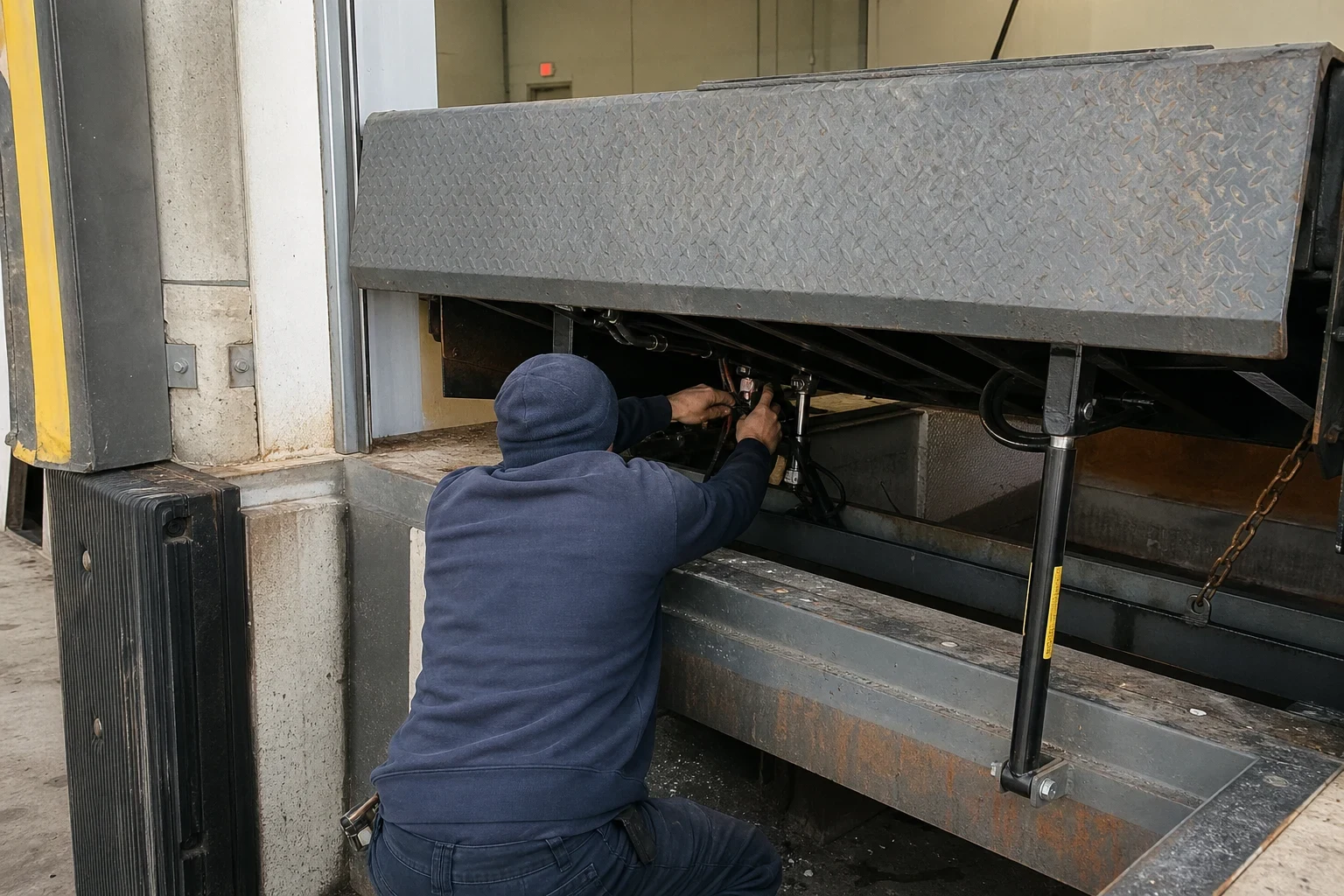
New dock equipment, put in the way it should be
Good equipment installed badly wears out early. A leveler that sits a quarter inch off in its pit will rack the deck and crack welds. A restraint mounted at the wrong height won't catch a low trailer bar. Most of the trouble we get called about later starts on install day.
So we take our time where it counts. We check the pit, the concrete and the power before anything gets bolted down. We tell you plainly if the old pit needs work first, and we show you photos of what we found.
We treat your dock like a neighbor's. We show up when we said we would, keep the area roped off and clean, and leave your doors working at the end of each day whenever the job allows.
What the install covers
- Site measurements
- We measure pit depth, dock height and door openings, and ask about the trailers you actually see. Reefers, flatbeds and box trucks all sit differently at the dock face.
- Removal of old equipment
- We pull out the worn leveler, restraint or door and haul it away. You don't end up with scrap steel sitting behind the building.
- Pit and concrete prep
- We clean out the pit, check the curb angles and patch or square up concrete where needed. Freeze and thaw is hard on dock pits around here, so this step matters.
- Setting and anchoring
- Equipment goes in level and plumb, anchored to the manufacturer's spec. Welds and anchors get checked before anything takes a load.
- Controls and testing
- We hook up controls, run the equipment through full cycles and adjust until it works smooth. Then we walk your dock workers through daily use.
When new equipment makes more sense than another repair
Repairs keep coming back
If the same leveler has had hinge, lip or hydraulic work over and over, the frame may be worn out. We'll tell you honestly whether one more repair is worth it.
Your trailers changed
New carriers or trailer types can leave the old leveler with too little range. Steep ramps slow forklifts and beat up loads.
You want a vehicle restraint
Wheel chocks get skipped and trailers creep. A vehicle restraint holds the trailer at the dock and gives your crew a clear signal light.
Doors are letting the weather in
Old overhead doors that don't seal or stick halfway cost you heat and time. A new door or a high speed door can fix both.
You're adding or reworking dock positions
Expansions and new tenants often need equipment from scratch. Planning the doors, levelers and restraints together saves rework.
How an install day goes
- 1
Walk the dock with you
We visit, look at the pits and doors, and listen to how your shipping runs. You get a written plan of what we'll install and what prep is needed.
- 2
Schedule around your trucks
We pick dates and times that keep your busiest doors open. On multi-door jobs we usually do one position at a time.
- 3
Prep and install
We remove old equipment, prep the pit and set the new unit. Our crew is first aid and CPR certified, and we keep the work zone marked off from forklift traffic.
- 4
Test, train and clean up
We cycle everything, adjust it, and show your people how it runs. The area gets swept and cleared before we hand the door back.
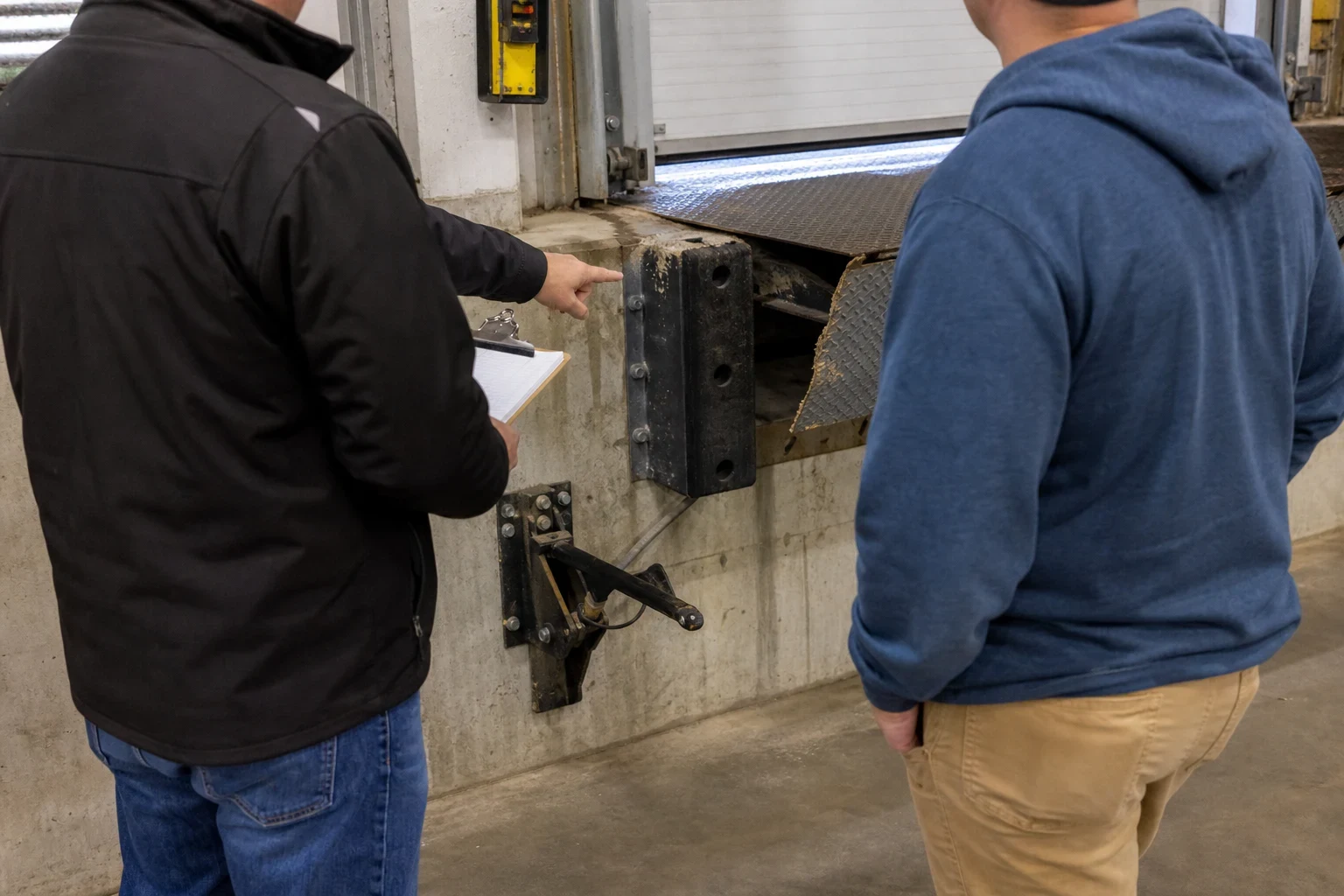
What moves the price of an install
Every dock is a little different, so we price each job after we've seen it. You get a written estimate broken out line by line. If we find something during prep that changes the work, we stop and talk to you first.
- Type of equipment
- A mechanical leveler, a hydraulic leveler and a vertical storing unit are very different jobs. Capacity and deck size matter too.
- Condition of the pit
- A clean, square pit is quick. Cracked concrete, broken curb angles or a pit that needs reshaping adds time and material.
- Power and controls
- Hydraulic levelers, restraints and powered doors need electrical supply and control panels. What's already there makes a big difference.
- Number of positions and timing
- Several doors done together often cost less per door. Work done after hours to keep shipping moving can add labor.
Questions about equipment installation
Something not covered here? (570) 774-5180
How long will a dock door be out of service?
A straight leveler swap into a good pit is usually a day of work at that position. Pit repairs or new electrical can stretch it. We'll give you a realistic schedule in the written plan so you can route trucks to other doors.
Can you install while we keep shipping?
Yes, in most cases. We work one position at a time, rope off our area and keep forklifts clear of the crew. Tell us your busy days and we'll plan around them.
Is the install work covered?
Yes. Our installation work comes with a 1-year labor warranty. If something we installed isn't right because of how we put it in, we come back and fix it.
Our pit is cracked. Do we need a whole new pit?
Not always. Many pits just need curb angle repair and some concrete patching. We'll look, take photos and tell you what it really needs before you commit to anything.
Can you put in a restraint at a dock with an older leveler?
Often, yes. We check the dock face, the leveler and the mounting surface first. If the leveler is near the end of its life, we'll tell you so you can decide whether to do both at once.
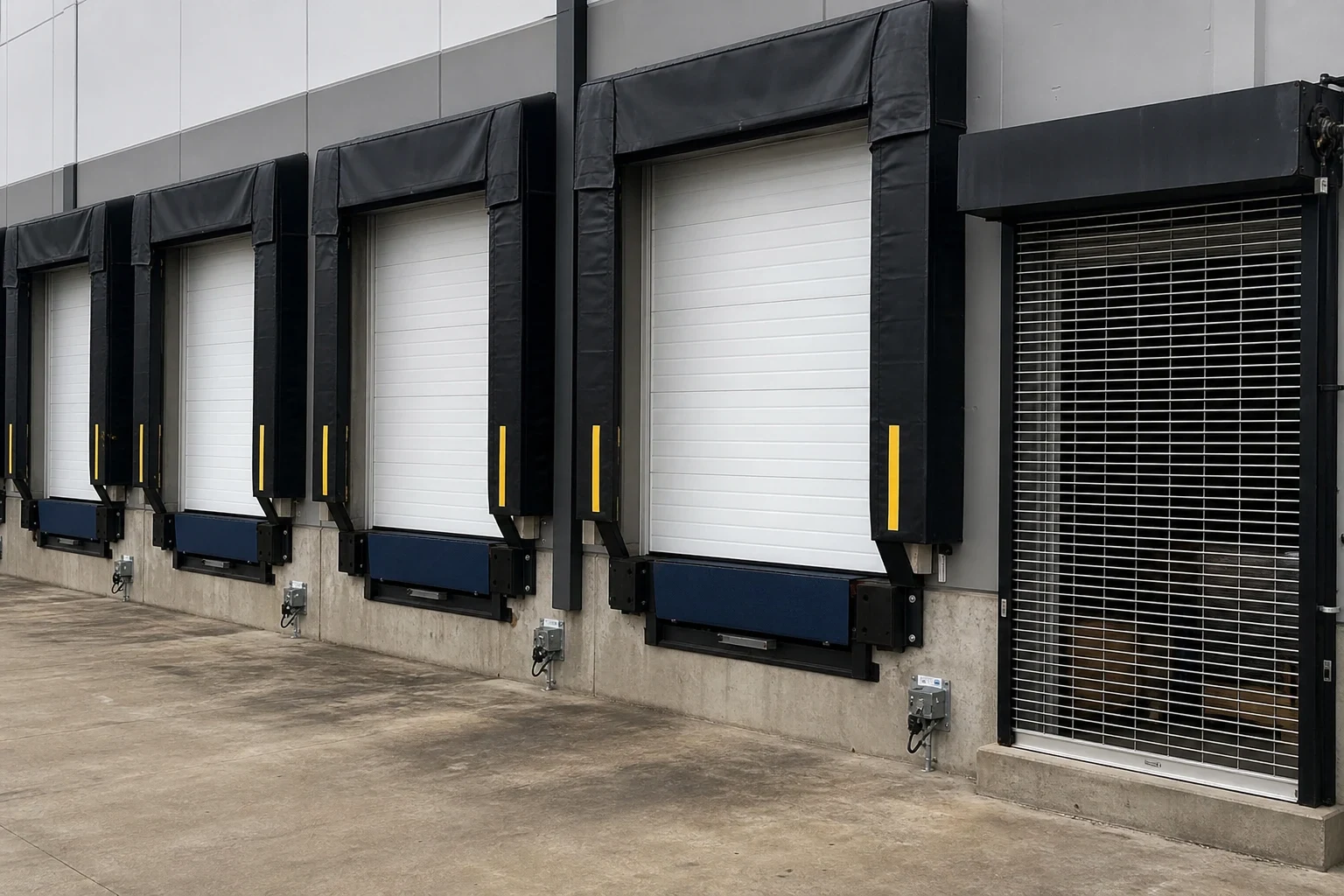
Talk to us about your dock
Tell us what you're replacing or adding and how your dock runs. We'll set up a time to come out, measure and go over the options with you.