ServicesVehicle Restraints
Vehicle Restraints in Pottsville
We repair, service and install vehicle restraints that hold a trailer against the dock while forklifts drive in and out. We find out why yours is slipping, faulting or sitting idle, fix it right and leave your crew with lights they can trust.
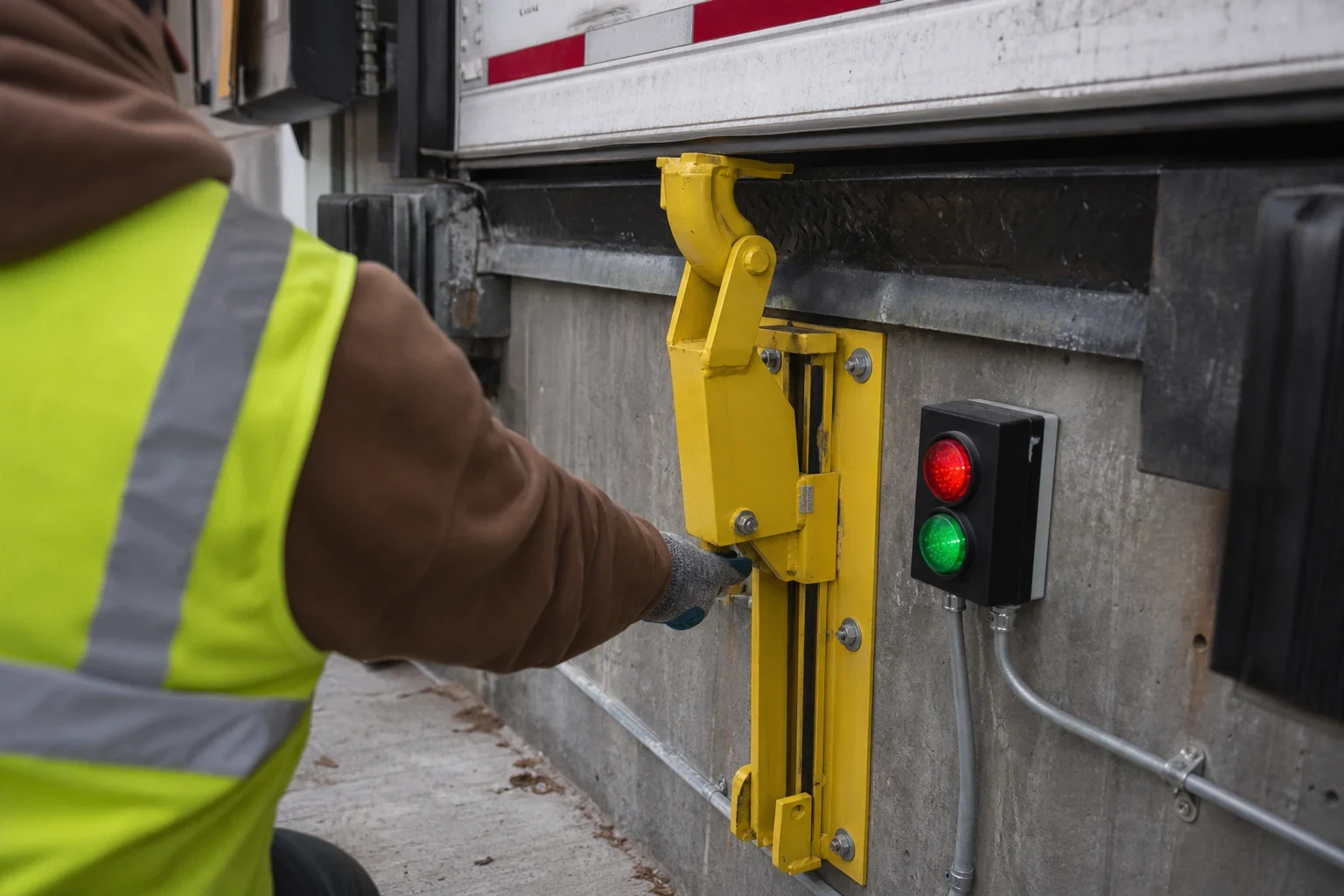
What a Vehicle Restraint Does for Your Dock
A vehicle restraint locks the trailer to the building so it can't creep forward or pull away early. Most are hook-style units that rise and grab the trailer's rear impact guard. Others hold the rear wheels. Either way, the point is the same: the trailer stays put until your dock crew says it can go.
When a restraint stops working, people start working around it. Drivers get waved off by hand, wheel chocks go missing and the red-green lights stop meaning anything. That is how forklifts end up in the gap between dock and trailer. We fix the restraint so the safety system is real again, not just a box on the wall.
We work on manual and powered units, and we deal with the parts tied to them, like the light package, the control panel and interlocks with your dock leveler and overhead door.
What Our Restraint Work Covers
- Hook and carriage repair
- We straighten or replace bent hooks, clear the carriage track and fix springs, rollers and pivots. A hook that won't rise high enough to catch the guard is one of the most common calls we get.
- Motors, hydraulics and controls
- On powered units we test the motor, pump, hoses and limit switches. We trace control faults back to the cause instead of swapping parts until something works.
- Light communication systems
- Inside and outside lights tell the driver and the forklift operator when it's safe. We replace dead bulbs, fix wiring and confirm the lights match what the restraint is actually doing.
- Interlocks
- We set up or repair interlocks so the leveler or door won't run until the trailer is secured. That takes guesswork out of a busy shift.
- New restraint installation
- If a unit is past saving, we install a replacement matched to your dock face and the trailers you see most. See our Loading Dock Equipment Installation page for how a full install runs.
Signs Your Vehicle Restraint Needs Attention
The hook misses the guard
If the hook rises and comes up empty, or only catches on some trailers, the travel or sensing is off. Your crew may already be skipping it.
Lights stay red or stay green
Lights stuck on one color mean nobody can trust them. A green light on an unsecured trailer is worse than no light at all.
Grinding, slow or jerky movement
Rust, worn rollers and packed debris in the track show up as noise and hesitation first. Road salt and slush from winter deliveries speed this up.
Fault codes or a dead panel
A blinking fault or a panel that won't respond usually points to a switch, sensor or wiring problem we can trace.
Visible damage from backing trailers
Bent housings, cracked mounts and loose anchor bolts mean the unit took a hit. It may still move, but it may not hold.
What Moves the Cost of Restraint Work
We don't quote a price before we see the unit, because two restraints with the same symptom can need very different fixes. Once we've looked, you get a written estimate by line item. These are the things that move the number most.
Manual or powered unit
Powered restraints have motors, pumps and controls to check and repair. Manual units are simpler but often need more track and spring work.
Parts availability
Common parts for current models are easier to get. Older or discontinued units can mean longer lead times or a case for replacement.
Damage to the mount and dock face
If the anchors or concrete around the unit are broken, that has to be fixed before the restraint can hold properly.
Interlocks and lights
Adding or rewiring interlocks to a leveler and door takes more time than repairing the restraint alone.
How a Restraint Repair Goes
- 1
We talk it through on the phone
You tell us what the unit is doing and which dock it's on. We ask a few questions about the make and how it's failing so we show up with the right parts in mind.
- 2
On-site check
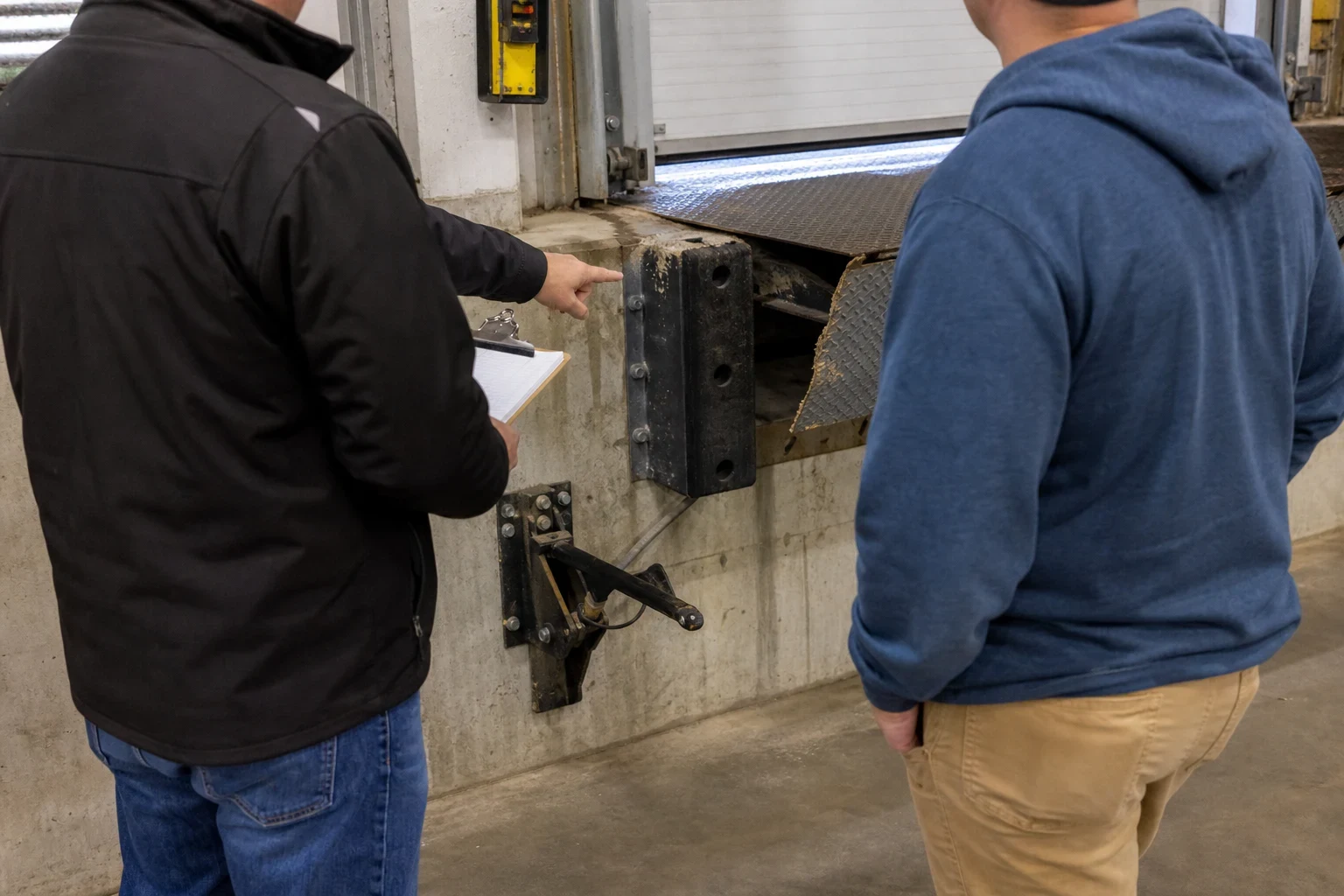
We lock out the unit, watch it cycle and inspect the hook, track, drive, controls and lights. We show you what we found and explain the repair-or-replace choice plainly.
- 3
Written estimate
You get the work laid out line by line before we start. We plan around your receiving schedule so one door is down, not the whole dock.
- 4
Repair and test
We make the repair, then cycle the restraint against a trailer if one is available. We check that lights and interlocks match the hook every time. Our techs are first aid and CPR certified, which matters on a working dock.
- 5
Walkthrough and cleanup
We show your crew how the unit should behave, clean up our parts and debris, and your repair is backed by our 1-year labor warranty.
Vehicle Restraint Questions
Do we still need wheel chocks if we have a restraint?
That depends on your own safety rules and what your insurer and safety staff expect. Many facilities use the restraint as the main hold and keep chocks for trailers it can't catch. We can tell you which trailers your unit will and won't secure so you can set a clear rule.
Why won't our restraint catch some trailers?
Some trailers have damaged, missing or oddly placed rear impact guards. Hook-style units can't grab what isn't there. If it's happening on many trailers, the hook travel or sensors may need adjusting, and we'll check that first.
Can you fix a restraint made by a different company than the one who installed it?
Yes. We work on most common hook-style and wheel-based units. If parts for an older model are hard to find, we'll tell you that up front and lay out the options.
How long will the dock door be out of service?
Many repairs are done in part of a day. Bigger jobs, like replacing a unit or repairing the concrete around it, take longer, and we'll give you a time estimate before we start. We work one door at a time so receiving keeps moving.
Is the repair covered after you leave?
Our restraint repairs come with a 1-year labor warranty. If the work we did doesn't hold up, let us know and we'll come back to make it right.
Should we add restraints to docks that don't have them?
If trailers creep at those doors or your crew is relying on chocks alone, it's worth a look. We can talk through options on the phone, and our Loading Dock Equipment Sales page covers what's available.
Get Your Trailers Holding Again
Tell us which dock is giving you trouble and what the restraint is doing. We'll talk it through, give you a quote by phone where we can and set a time to come out that fits your shipping schedule.